

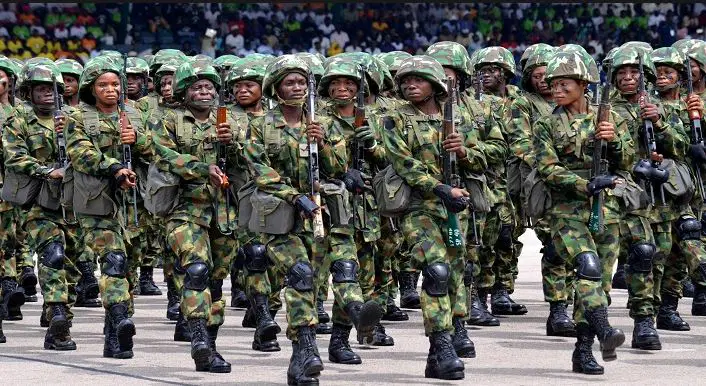
The Nigerian Army’s recent decision to suspend statutory and voluntary retirements for certain categories of officers is a direct response to the escalating security crisis in the country. This move follows President Bola Tinubu’s declaration of a nationwide security emergency on November 26, prompted by alarming incidents of mass abductions, including the kidnapping of hundreds of students and worshippers across various states.

In an internal memo dated December 3, Maj. Gen. E. I. Okoro outlined that the suspension aims to maintain operational capacity and retain experienced personnel as the Armed Forces expand to address rising insecurity. The memo references the Harmonised Terms and Conditions of Service Officers (HTACOS) 2024, which allows for service extensions in the interest of the military, despite the usual retirement criteria based on age limits and years of service.
The suspension specifically targets officers who have failed promotion examinations multiple times, those passed over for promotion, those who have reached the age ceiling for their ranks, and those who have served for 35 years. The Army has made it clear that while affected officers may apply for extensions, those who choose to remain in service will not be eligible for further promotions or career advancements.
Support for this decision has been voiced by various veterans and retired military officials. Dr. Awwal Abdullahi, Secretary-General of the Military Veterans Federation of Nigeria, praised the move as a way to retain trained officers who would otherwise be retired prematurely. Retired Brigadier General Peter Aro described the suspension as a reasonable short-term response to the current security challenges, advocating for enhanced welfare and financial incentives for those who choose to extend their service.
Other retired officers, including Brigadier General Bashir Adewinbi and Brigadier General George Emdin, echoed similar sentiments, emphasizing the importance of retaining experienced personnel to stabilize command structures during ongoing operations. They also highlighted the need for reforms to address manpower gaps and improve the overall welfare of military personnel.
Overall, the suspension of retirements reflects a strategic approach to bolster the Nigerian Army’s capabilities in the face of significant security challenges, while also addressing concerns about the retention of experienced officers. The military leadership is expected to review this policy as the security situation evolves.
