

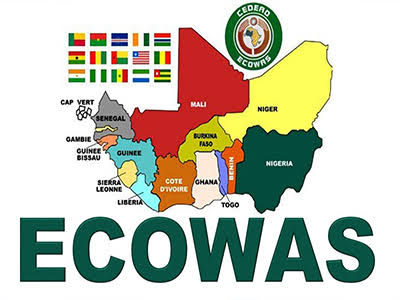
The Economic Community of West African States (ECOWAS) has officially declared a state of emergency across the region due to escalating security challenges and political instability. This announcement was made by the President of the ECOWAS Commission, Omar Touray, during the 55th Session of the Mediation and Security Council held in Abuja.

Touray highlighted the urgent need for introspection regarding the future of democracy in the region, emphasizing the necessity of investing in security measures. He provided a grim overview of the political climate, indicating that member states are facing a high-risk environment, with various factors contributing to this assessment. These include military interventions in countries like Guinea-Bissau and Benin, non-compliance with democratic transition norms in Guinea, and the growing influence of terrorist and criminal groups.
A significant concern raised by Touray is that elections have increasingly become a source of instability within the community. He pointed to recent attempted coups and the need for a coordinated regional response to combat terrorism and cross-border crime. The declaration of a state of emergency was described as unprecedented, underlining the critical situation facing the region.
Touray called for more frequent meetings of the Mediation and Security Council to enhance cooperation among member states in addressing these challenges. He identified several priority areas requiring immediate attention, including the crisis in Guinea-Bissau, political transitions, rising political exclusion, and maintaining regional unity amidst external pressures.
The humanitarian situation in West Africa is also deteriorating, with recent UNHCR data indicating that approximately 7.6 million people are forcibly displaced in the region, including over 6.5 million internally displaced persons. The largest displaced populations are found in Nigeria, Burkina Faso, Niger, and Mali.
Despite these challenges, Touray reaffirmed ECOWAS’s commitment to promoting peace and stability in the region, urging member states to uphold constitutional norms and work together to preserve unity. He welcomed new ministerial representatives to the session, signaling a collaborative approach moving forward.
