

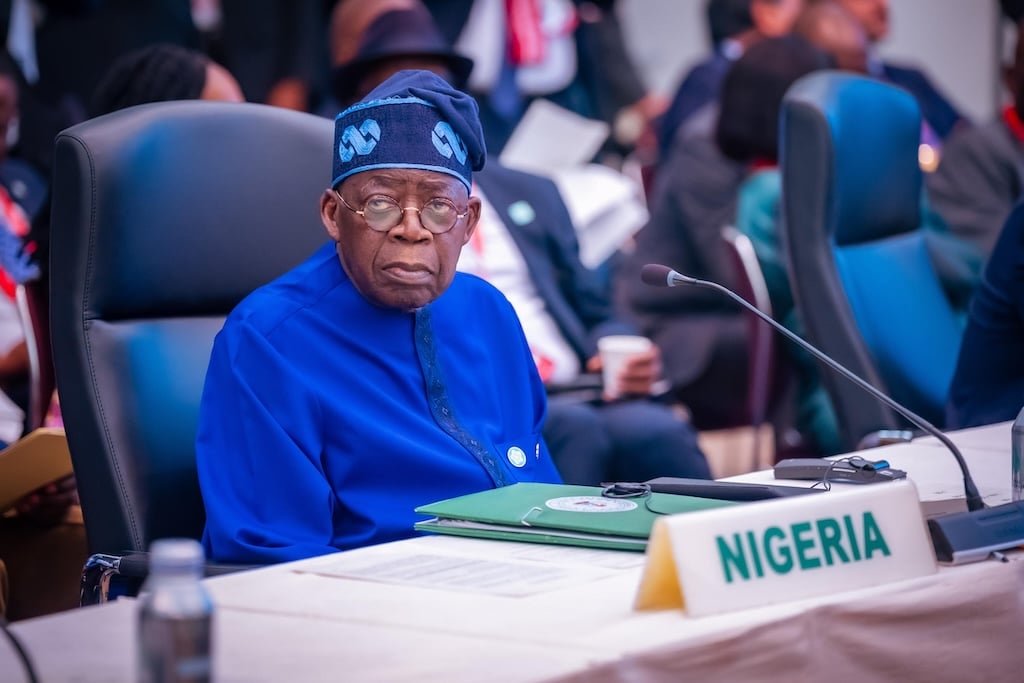
President Tinubu on Wednesday declared a nationwide security emergency, ordering the army, police and intelligence services to immediately expand recruitment and deploy thousands of additional personnel. He also urged the National Assembly to initiate the process of legalising state police to tackle the escalating wave of kidnappings and terrorist attacks across the country in the past week. But in a rare departure from the usual solidarity with the executive, several Senators and House of Representatives members criticised the Federal Government for negotiating with bandits for the release of hostages seized in separate attacks in Kwara and Kebbi States.
The lawmakers demanded a halt to the negotiation with the terrorists and punishment for the official who ordered the withdrawal of troops from the Government Girls Comprehensive Secondary School, Maga, Kebbi State, where 24 students were kidnapped on November 17.
The bandits also stormed St. Mary’s Catholic School, Papiri, in Agwara LGA of Niger State, abducting over 300 pupils and 12 teachers just four days after 24 schoolgirls were taken from GGCSS. During the Kebbi attack, the vice principal, Hasan Makuku, was shot dead, while the principal was injured. About 50 girls later escaped, but the rest are still with their captors. Another gang invaded a CAC church in Kwara State, killing at least two worshippers and abducting 38 people. The victims were released on Sunday, while the students were freed on Tuesday. The abductions resulted in the closure of scores of schools in Kebbi, Bauchi, Yobe, Adamawa, Taraba, Plateau, Niger, Katsina and Kwara States. The Federal Government also ordered the closure of 41 Federal Unity Colleges across the country.

The Presidency had defended the resort to negotiation with the bandits, noting that this was done to ensure the safety of the victims.
The Special Adviser on Information and Strategy to the President, Bayo Onanuga, dismissed speculation that a ransom was paid for the release of the hostages. He said the security agencies decided not to engage the bandits at their hideout because the victims were being used as a shield. “What sometimes restrains them from going after them is the risk of collateral damage. They go about abducting our people, and they use them as a shield so they will not be attacked. “So, they don’t just want to be attacking them. They need to be sure that they are not using our people as a kind of shield,” he stated. But senators and House members did not buy his argument, asserting that the approach may further embolden the criminals and worsen the country’s security crisis.
There was a heated exchange during Senate plenary as the lawmakers warned that the nation was “under attack” and on the brink of losing public confidence. The debate in the chamber came just hours after the Senate adopted a separate motion commending President Tinubu and the security agencies for the release of the abducted victims in Kwara and Niger States.
The motion, sponsored by Senator Asiru Yisa (Kwara South), demanded the immediate creation of a Joint Task Force for the Kwara–Kogi corridor, an area security agencies describe as a major escape route for bandits. Yisa told the chamber it was “deeply disturbed” by the attack on Christ Apostolic Church, Eruku, where gunmen killed two worshippers and kidnapped 38 others. He further raised an alarm over reports that soldiers were withdrawn from the Kebbi school hours before bandits invaded. Reacting, Deputy Senate President, Barau Jibrin, said the escalating violence had made it clear that Nigeria must seek broader support We should seek assistance from overseas, urging collaboration with global partners to stem the crisis,” he said,
Insisting that the country could still overcome its security challenges with the right structure and support, Senate Leader, Opeyemi Bamidele, described the current wave of attacks as a defining moment for the nation, warning that “business as usual” could lead to catastrophe. While welcoming the rescue of abducted victims, he expressed concern that security agencies offered no information on terrorists neutralised during the operations. He also cautioned colleagues against attention-seeking, referencing earlier calls in the House of Representatives for a shutdown of the National Assembly. Bamidele further charged the Senate to examine its own internal systems. “If we are calling on the President to rejig the security architecture, we must also look into our own arrangement. I am not impressed with our Committee on Security and Intelligence. We should rejig it ourselves,” he said.
But Senator Enyinnaya Abaribe pushed back against attempts to blame previous administrations, insisting the current government must accept responsibility for its failings. He cited reports that troops were withdrawn hours before the Kebbi school attack. “Who asked them? Nobody knows. If I were the Commander-in-Chief, I would demand answers Senate President Godswill Akpabio expressed concern that intelligence failures and internal sabotage were undermining the security agencies, citing reports that the location of a brigadier general killed in Borno was compromised. He found it troubling that despite security advisories issued to schools in Kebbi, bandits still struck unhindered.
Tension heightened when Senator Seriake Dickson warned that Nigeria was “losing prestige and integrity” due to constant attacks, accusing the majority caucus of massaging the issues rather than addressing them head-on. His remarks triggered an uproar from APC senators, forcing the presiding officer to cut off his microphone. As some lawmakers reiterated claims that security agencies were aware of the locations and motives of terrorists, Akpabio cautioned against turning the crisis into a sectarian narrative. “This is orchestrated to damage the image of democracy. There is nothing like targeting Muslims or Christians. It is an attack on all. This country is under attack,” he said.
Senator Adams Oshiomhole rose in defence of President Tinubu, arguing that the administration was doing its best under severe pressure. He demanded an investigation into the troop withdrawal in Kebbi. “Who ordered the military to withdraw? That person should be tried for terrorism. The Senate should adopt this demand among its resolutions,” he said. He also queried alleged inconsistencies in the justice system, noting that a convicted terrorist was sentenced to 20 years while someone who killed a bandit in self-defence was condemned to death. Some lawmakers renewed calls for the death penalty for kidnappers
