

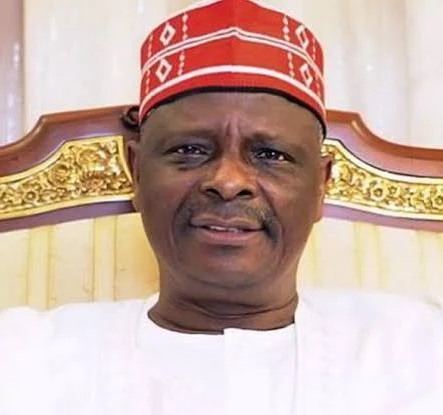
Former presidential candidate and leader of the New Nigeria Peoples Party (NNPP), Senator Rabiu Musa Kwankwaso, has said he is yet to recover from the shock of the defection of Kano State Governor, Abba Kabir Yusuf, to the All Progressives Congress (APC).
Expressing disbelief over the governor’s realignment with the ruling party, Kwankwaso said the political development still feels unreal to him, as though he were in a dream.
 The leader of the Kwankwasiyya movement said Governor Yusuf would eventually regret leaving the NNPP, the platform that brought him to power.
“Many people I spoke to felt it was some kind of arrangement between him and me, or between him and others. Even I often find it hard to believe that things are unfolding the way they are.
“When I lie down, I reflect and ask myself: what really happened? Who was at fault? Was it me? Was it the party? Were party members at fault? But I have not been able to find an answer.”
Kwankwaso made the remarks during an exclusive interview with BBC Hausa, monitored by our correspondent, where he expressed deep disappointment that the governor had, in his words, “handed over the mandate of NNPP members and the people of Kano to the Gandujiyya political camp” without any strong justification.
Governor Yusuf, who recently dumped the NNPP, had cited deepening internal crises and the need to safeguard the broader interests of the people of Kano State as reasons for his defection.
“I write with a deep sense of gratitude to formally notify the leadership of the New Nigeria People’s Party (NNPP) of my decision to resign my membership of the party, with effect from Friday 23rd January 2026.
“In recent times, the party has been confronted with persistent internal challenges arising from leadership disagreements and ongoing legal processes, many of which are presently before the courts for judicial determination.
“The growing disenfranchisement among party members has created deep divisions within the party structure, resulting in cracks that appear increasingly irreconcilable and have generated uncertainty at both state and national levels.
After careful reflection, and without prejudice to the party’s capacity to resolve its internal challenges, I have come to the conclusion that my resignation is in the best interest of the people of Kano State,” Yusuf wrote.
However, dismissing the governor’s explanations, Kwankwaso insisted that all the issues raised could have been resolved through dialogue and cooperation if the governor had engaged him.
“I can assure you, to the best of my knowledge, there is no party more peaceful and stable than the NNPP. And if there is any, let them hold their national convention and candidate selection processes, then you will see disputes,” he said.
Commenting on politicians who have left the NNPP but still claim allegiance to the Kwankwasiyya ideology, Kwankwaso described the situation as a choice between light and darkness.
“Light and darkness have already been defined in Kano. If you want to practice Kwankwasiyya, who asked you to leave Kwankwasiyya? Stay where Kwankwasiyya is and practice it there,” he said.
