

The leadership of Nigeria’s National Assembly on Friday intensified calls for the adoption of automatic tickets for serving lawmakers under the All Progressives Congress (APC), arguing that such a move is critical to sustaining ongoing reforms championed by President Bola Ahmed Tinubu.
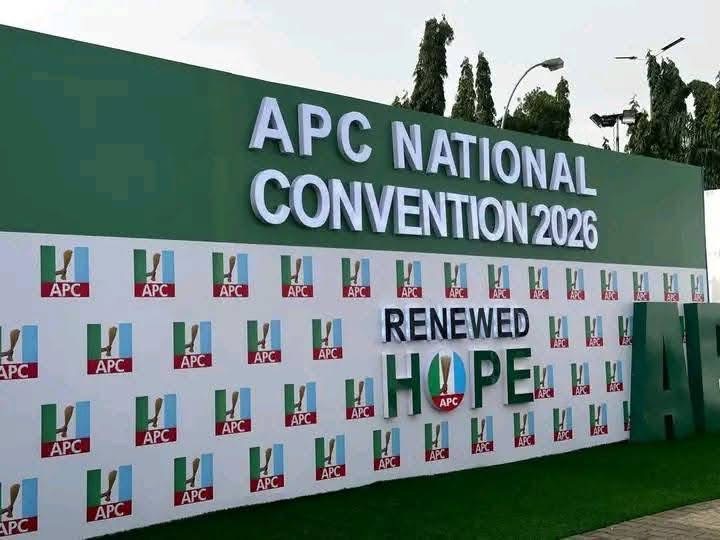
The demand emerged as a major highlight of the party’s 4th Elective National Convention held at Eagle Square, where party stakeholders converged to elect new national officers and outline the APC’s future direction.
Speaking on behalf of APC caucuses in both chambers, the Speaker of the House of Representatives, Tajudeen Abbas, argued that granting automatic return tickets to performing legislators would promote continuity, stability, and effective policy implementation in line with the administration’s Renewed Hope Agenda.
According to Abbas, the National Assembly has played a pivotal role in advancing key reforms of the Tinubu administration, including fiscal and electoral changes, and should be strengthened rather than distracted by internal party contests.
“The stability of the legislature is critical to sustaining the reform process. Automatic tickets will allow lawmakers to focus on delivering on their mandate without the distractions of internal party contests,” he said.
He maintained that the proposal should not be seen as a privilege, but as a strategic mechanism to deepen governance and ensure policy consistency at a time of major economic and institutional reforms.
The Senate President, Godswill Akpabio, aligned himself with the Speaker’s position, expressing strong support for continuity in the legislature.
He commended the convention’s organisation and widespread participation, noting that delegates from all states, the Federal Capital Territory, and the diaspora were represented.
Akpabio also used the occasion to highlight what he described as the achievements of the Tinubu administration, citing reforms in education financing through NELFUND, agricultural initiatives, expansion of rail transport, and ongoing infrastructure projects such as the coastal highway.
He praised Tinubu’s leadership, referencing his record in transforming Lagos State and his broader vision for national development.
He further applauded former President Muhammadu Buhari and other founding figures for laying the foundation of the APC, noting that the party’s growth—from controlling 18 states at inception to its current dominance—reflects public confidence in its governance approach.
“For those of us in the legislature, you can be assured of our continued support. When the National Assembly is stable, Nigeria is better off,” Akpabio stated.
The call for automatic tickets also found resonance among other stakeholders, including former governors and members of executive councils, who argued that leadership continuity is essential to preserving the gains recorded under the APC-led administration.
Although President Tinubu did not directly address the proposal in his speech, he repeatedly emphasised party unity, discipline, and the need to sustain reforms.
“Our greatest strength has never been our size, but our unity,” the President said, urging members to avoid divisions that could undermine collective progress.
