

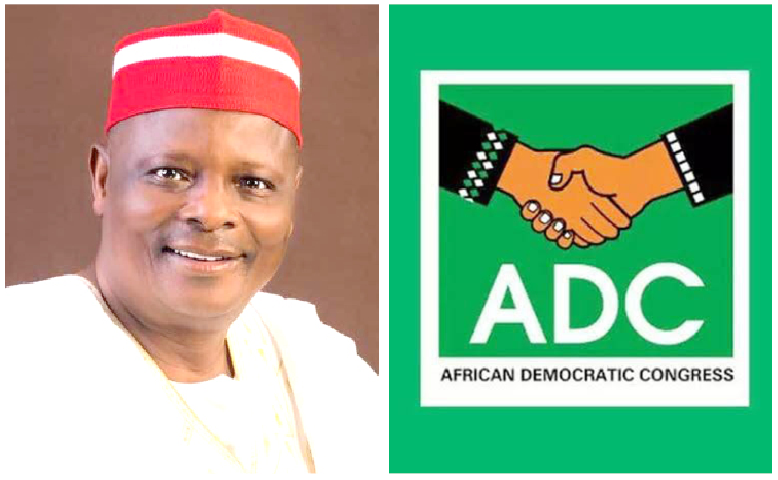
In a move bound to inject life into opposition politics in Nigeria ahead of 2027 general elections, former governor of Kano State, Rabiu Musa Kwankwaso, yesterday resigned from the New Nigeria Peoples Party (NNPP).
The action is believed to pave the way for him to formally join the African Democratic Congress (ADC) and team up with major opposition figures to contest the forthcoming elections.
Former Vice President Atiku Abubakar, who was the presidential candidate of the Peoples Democratic Party (PDP); former presidential candidate of the Labour Party, Peter Obi; former Senate President, David Mark and former governors of Osun and Rivers states, Rauf Aregbesola and Rotimi Amaechi are all in the ADC.
The development has raised the hope of the opposition who were almost giving up on the prospects of contesting the presidential elections in 2027.
Analysts posit that it is the lack of a similar alliance in 2023 that was responsible for the inability of the opposition figures to clinch the presidency, when Atiku, who flew the flag of the Peoples Democratic Party (PDP), polled 6,984,520 votes; Obi of the Labour Party, 6,101,533 votes and Kwankwaso of the NNPP, 1,496,687 votes.
Analysts contend that if the three had stood together under one platform and their votes combined, they could have made the then candidate of the ruling party, Bola Ahmed Tinubu, who scored 8,794,726 to lose the election.
It is not clear if it is such permutations that have brought the three former presidential candidates under one banner this time around.
For almost three years, however, Nigeria has witnessed an unprecedented sweeping of the nucleus of all major and minor parties in the country by the ruling All Progressives Congress, APC, leading to fears that the country may evolve into a one-party state.
From serving and former governors, key opposition figures in the National Assembly to influential politicians across the country, the APC has been attracting opposition elements in their numbers.
For the first time since 1999, Lagos, Kano, Kaduna and Rivers all have governors from the ruling party.
Added to that, the states with the larger resources, Lagos, Rivers, Akwa Ibom, and Delta are all under the APC.
The one that was yet to be captured entirely out of the states whose votes could alter equations was Kano, due to the inability of the ruling party to woo Kwankwaso to its fold.
Kwankwaso is seen as the main figure behind Kano voting for the NNPP in 2023. Even with the defection of Governor Abba Kabir Yusuf, politicals say all is not yet Uhuru for the ruling party as far as Kano is concerned.
There have been efforts to woo Kwankwaso to the ruling party, but insiders say the deal could not pull through as the then NNPP was said to set his conditions.
As negotiations lingered, the governor decided not to wait for his political godfather and ran to embrace the ruling party, which elicited fresh concerns for both the leaders of the ruling party in the state and the NNPP stalwarts.
