

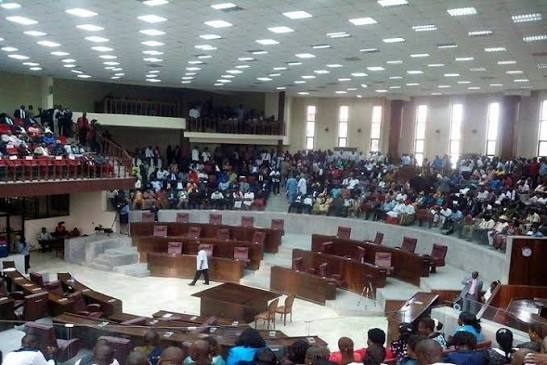
The Akwa Ibom State House of Assembly has passed a bill establishing a Mental Health Services Department to regulate and improve mental healthcare delivery across the state, replacing a law that dates back over a century.
The legislation sailed through third reading during plenary held at the Ministry of Local Government and Chieftaincy Affairs Chamber, Government House, Uyo, on Tuesday, after the House Committee Chairman on Health, Moses Essien, presented the committee’s report.
The bill had earlier passed its second reading before being referred to the committee for detailed scrutiny. A public hearing was held on March 23, 2026, where stakeholders in the health sector were invited to submit memoranda.
Essien said the new law provides a coordinated framework for mental health services in the state and will replace the outdated Lunacy Law of 1916.
This new law will safeguard the rights of persons with intellectual, psychosocial, and cognitive disabilities as well as improve access to quality mental healthcare, rehabilitation, and community-based treatment,” he said.
Key provisions of the legislation include guidelines for obtaining consent for treatment and powers for the Commissioner for Health to formulate regulations governing mental health services in the state.
After deliberations, the House dissolved into a Committee of the Whole for a clause-by-clause consideration of the bill.
The report was adopted and the bill passed through its third reading following a motion moved by Hon. Jerry Otu and seconded by Prince Aniefiok Attah.
Speaker Udeme Otong announced the bill’s passage and directed the Clerk of the House, Mrs Nsiakak Orok, to transmit the resolution to the state governor for assent.
Essien described the legislation as a turning point for mental healthcare in the state.
“The new law is expected to usher in a more humane, structured, and rights-based approach to mental healthcare delivery in Akwa Ibom State,” he said.
Mental health is a state of well-being enabling individuals to cope with life’s stresses, realise their abilities, learn, work, and contribute to their community.
It entails emotional, psychological, and social health, influencing cognition and behaviour.
