

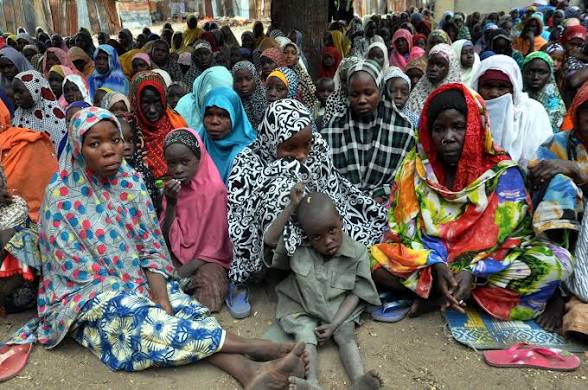
Before the sun rises over the plains of Benue, the camps stir. Not with the rhythm of village life, but with the uneasy movement of people who have nowhere else to go.
A mother bends over a small fire, coaxing a reluctant flame to life. Nearby, a baby cries in a makeshift cot, its mat still damp from the night rain. Children rub their eyes and drift toward a class under a tree, hoping a volunteer teacher will show up. Tarpaulin shelters stretch into the distance, held together by rope, plastic, and fading cloth.
This is home. Or the closest thing left.
Across Benue State, hundreds of thousands of internally displaced persons live in camps that were never meant to last. What was meant to be temporary has stretched into years. Nigeria carries more than three million displaced people. Benue alone holds almost a half of this number scattered across camps and forgotten settlements. Behind every number is a village emptied overnight. Behind every tent is farmland left to silence. Behind every family is a question that refuses to go away. How did this become normal.
Benue is known as the food basket of Nigeria. Its soil once fed millions beyond its borders. Farming was not survival. It was identity. A visit to onr IDP camp revealed more:
Terdoo remembers!
He used to wake before the sun, not because life was desperate, but because the land demanded discipline. Farming was not guesswork. It was knowledge passed from hand to hand, season to season. He could smell the rain before it fell. He knew when the soil was ready and when it was not.
“Hunger was not constant,” he says quietly. “It came and went. It was never this.”
His yam barns stood full. Maize dried openly without fear. His children ate before they complained. There was always enough to plan for tomorrow.
“What did a normal day look like then?”
He pauses for a long time, as if measuring a life that now feels too far away.
It was simple,” he says. “Work. Food. Rest. Laughter. You did not wake up thinking about survival. You woke up knowing you would live.”
Then fear arrived where rain once did.
At first, it came as stories. Distant attacks. Rumours that sounded too cruel to be true. Then it came closer. Names became familiar. Paths became dangerous. Fields were abandoned halfway through seasons.
“What happened the night you left?”
He looks down.
