

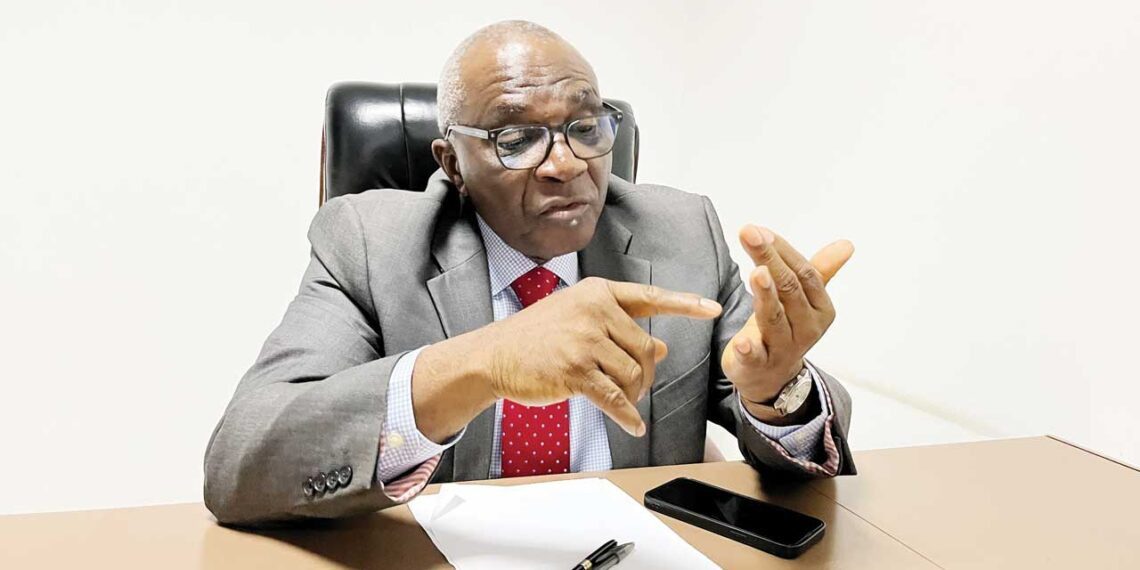
The Special Adviser to the President on Information and Strategy, Bayo Onanuga, has said President Bola Ahmed Tinubu has achieved significant economic gains in less than three years in office.
He cited a recent assessment by The Economist.
Onanuga, in a post on his verified X handle, @aonanuga1956, drew attention to the January 29 edition of the magazine, which reviewed the state of Nigeria’s economy before and after President Tinubu assumed office in 2023.
He stated: “President Tinubu has not spent three years yet, and he has a lot to show for his stewardship.”
He then shared excerpts from the magazine, which notes that President Tinubu inherited a deeply troubled economy marked by severe fiscal and monetary imbalances.
According to the magazine, when President Tinubu took office, the Central Bank of Nigeria (CBN) faced unmet obligations of about $7 billion, equivalent to 1.4 per cent of GDP at the time, a situation that triggered a mass exit of international investors.
The publication adds that the apex bank’s credibility had been undermined by loose monetary policy, mismanagement of foreign exchange reserves and the maintenance of an unsustainable multi-tier exchange rate regime, while the Federal Government spent about $10 billion, or 2.2 per cent of GDP, on fuel subsidy in 2022 alone.
It says the Tinubu Administration responded with “drastic structural reforms,” including the removal of fuel subsidy and the unification of the foreign exchange market, allowing the naira to float more freely.
The magazine further observes that monetary policy was aggressively tightened to curb inflation, while the government also moved to improve security in the Niger Delta and introduced tax incentives to attract investors and boost oil production.
While acknowledging that Nigerians, particularly the poor and middle class, continue to feel the impact of higher fuel and food prices, the publication says the reforms appear to be yielding results.
It notes that annual inflation, which peaked at 34.8 per cent in December 2024, fell sharply to 15.2 per cent by December 2025, while economic growth is returning, with the International Monetary Fund (IMF) projecting 4.4 per cent growth in 2026.
According to the assessment, the naira has stabilised after two major devaluations in 2023, and Nigeria’s foreign exchange reserves have risen to $46 billion, their highest level in seven years.
The publication says improvements in macro-economic stability are restoring investor confidence, citing plans by Shell to finalise development of a $20 billion offshore oilfield by 2027 and a $1.5 billion deepwater investment commitment by Exxon Mobil.
It adds that local business leaders are also more optimistic, with oil and gas output rising due to improved security and increased participation by indigenous firms in the Niger Delta.
The magazine concludes that the reforms should provide the government with greater fiscal breathing room, particularly as a more competitive naira boosts non-oil exports such as cocoa and cashew nuts.
The Economist analysis says: “It is difficult to overstate the mess Mr Tinubu inherited.
“When he took office in 2023, the country’s central bank had $7billion (equivalent to 1.4 per cent of GDP at the time) in obligations it could not meet, prompting international investors to flee en masse.
“The bank’s credibility had been dented by a recklessly loose monetary policy, its mismanagement of dwindling foreign-exchange reserves and efforts to maintain an unsustainable tiered exchange-rate system.
Nearly three years on, Nigeria’s 230 million people, especially the poor and the middle class, are still reeling from increases in fuel and food prices. Poverty has risen.
“But it looks as though Mr Tinubu’s bitter medicine is helping. The annual inflation rate, which hit a nearly 30-year high of 34.8 per cent in December 2024, fell to 15.2 per cent in December 2025.
“Growth is returning. The IMF expects the economy to expand by 4.4 per cent in 2026. Following two steep devaluations in 2023, the naira has stabilised (see chart). The central bank’s foreign-exchange reserves have risen to $46billion, their highest level in seven years.
